
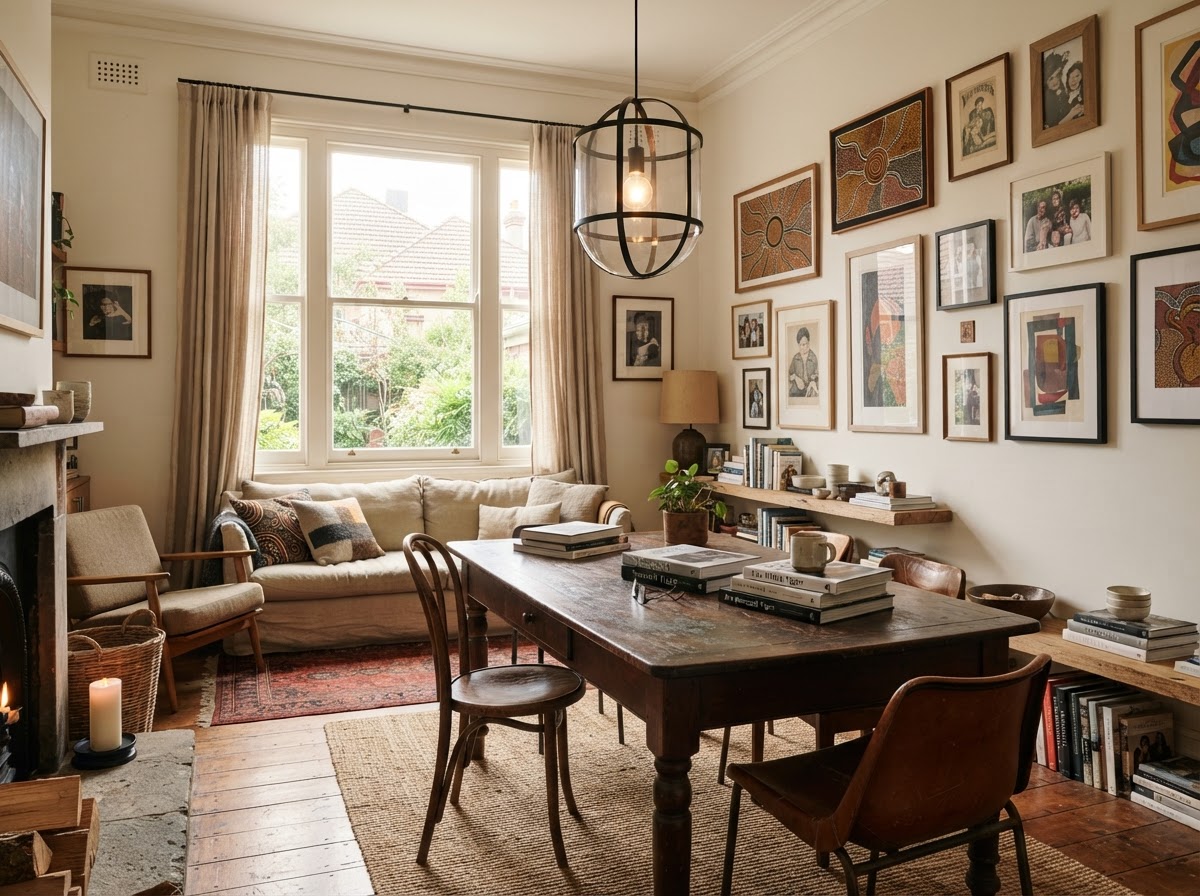
Your interior design should follow your personality, with trends used selectively for inspiration. Designers interviewed by Homes & Gardens say trends work best when they are woven in with what you already own, and that trend led purchases are best kept to pieces that are affordable and easy to replace [1]. The permanent parts of a home deserve a longer view, shaped by quality, the architecture of the property and how you live [3] [4]. The best approach is not trends versus personality. It is knowing where to use each.
- Inspiration, not instruction: trends can introduce new materials, colours and ideas, but they should not dictate how your home looks [1]
- Permanent means patient: cabinetry, flooring and structural changes deserve more thought than cushions, lamps and paint [1]
- Timeless is not beige: lasting interiors come from proportion, craftsmanship and honest materials, not from playing safe [3]
- Personal pieces count: collected and curated rooms feel both timeless and personal [1]
- Function first: good design starts with how a household arrives home, cooks, gathers and retreats [4]
The most successful interior is the one that still feels unmistakably yours tomorrow.
Trends or personality at a glance
| Part of the home | What designers say | What it means for you |
|---|---|---|
| Cabinetry, flooring and structural changes | Designers caution against major trend driven changes and favour quality finishes that enhance the existing architectural style of the home [1] [3]. | Choose for longevity, quality and the character of the property. |
| Cushions, lamps, vases and paint | Trend led purchases are best kept to affordable, easily replaced items [1]. | This is the place to experiment with what is new. |
| Art, books and collected objects | Collected and curated looks feel timeless and personal [1]. | Give the pieces with a story a place on show. |
| The architecture | Take design cues from the period of the building first [2]. Removing original features in the name of safety is a mistake [3]. | Let the property lead and work with what it already has. |
| Daily routines | Design begins with how a family arrives home, who cooks, who gathers and who retreats [4]. | Resolve how each room works before choosing how it looks. |
Open Instagram, Pinterest or a design magazine and you will quickly discover what you are apparently supposed to want.
One year it is minimalism. Then curves. Then earthy neutrals, statement stone, chrome, maximalism or a particular shade that suddenly seems to be everywhere.
But should the interior of your home really be dictated by what is trending? There is nothing wrong with trends. The danger comes when inspiration becomes imitation.
Should you follow interior design trends?
You should follow interior design trends only where they suit you and the home you already have. Trends are useful. They expose us to new materials, colours, furniture, layouts and ideas we might never have found alone.
Designers interviewed by Homes & Gardens make the case for moderation. Catherine Ebert of Catherine Ebert Interiors suggests a trend works best when it is woven together with your other furnishings so it becomes part of a larger whole, and not when a whole room is overhauled to match it [1].
Social media makes this harder. Marie Claire Australia reports that algorithms promote whatever performs well, which pushes people towards the same looks and leaves homes resembling one another [2].
Should your home tell your story?
Yes. A home should reflect the people who live in it, not a hotel lobby, a furniture showroom or an Instagram feed. The colours you are drawn to, the artwork you have collected, the books you have read, the objects you brought home from travelling and the furniture with a history create something a trend cannot manufacture: personality.
Australian designers say the same. Melbourne interior designer Chelsea Hing told Marie Claire Australia that personal style comes out of your own beliefs about what a home should be, and that simply reproducing a trend risks a space that lacks integrity and dates quickly [2].
Kati Curtis of Kati Curtis Design puts it another way: collected and curated looks are the ones that feel timeless and personal [1].
Does that mean ignoring trends completely?
No. A new trend might introduce you to something you love. The key is one honest question: “Would I still want this if Instagram stopped showing it to me tomorrow?” If the answer is yes, it may belong in your home.
There is also a real difference between bringing in a trend through a lamp, an occasional chair, a cushion or a paint colour, and committing to it through expensive cabinetry, flooring or architectural changes. Designer Bethany Adams recommends keeping trend purchases to affordable, easily replaced pieces and warns against major investment in trend driven changes to the fabric of a home [1].
The harder and more expensive something is to replace, the stronger the argument for longevity, quality and the architecture of the home.
What makes an interior timeless?
An interior is timeless when it is built on quality, proportion and personal expression, not when it is beige, conservative or free of character. Homes & Gardens put the question to designers in 2026 and found that reducing timelessness to a safe, neutral formula can date a home faster [3].
Marie Flanigan of Marie Flanigan Interiors describes timelessness as often misdefined. In her view it rests on restraint, proportion and craftsmanship, and on honest materials such as stone and wood that age, soften and deepen over time [3]. Bethany Adams adds that original architectural features should be kept, not stripped out in search of something safer [3].
Some of the interiors that age best are those that do not look as though they were finished in one particular year. An antique table beside contemporary lighting. Original details alongside modern furniture. Natural stone, timber and linen layered with artwork and objects gathered over many years. The result feels collected, not copied.
Should function come before fashion?
Yes. How you live should be resolved before how a room looks. A beautifully photographed kitchen is not a success if it does not work for the family using it.
ArchiPro Australia describes design that begins with daily life: how a family arrives home, where the bags are dropped, who cooks, who gathers and who retreats [4]. It also encourages designers to listen for the need beneath the request. Someone asking for a larger kitchen may really be asking for a more social home [4].
Good interior design therefore asks more than “What looks beautiful?” It asks “How will this home be lived in?”
How should you decide what belongs in your home?
These six steps bring trends and personality together. They work for a single room or a whole house.
- 1. Start with how you live. Map your daily routines before you look at finishes, from where you arrive home to where you cook, gather and retreat [4].
- 2. Let the architecture lead. Take your cues from the period and character of the building, and keep the original features that give it identity [2] [3].
- 3. Choose permanent elements for the long term. Cabinetry, flooring and stone are costly to change, so select them for quality, craftsmanship and materials that age well [3].
- 4. Keep trends to what is easy to change. Try the new colour or shape in cushions, lamps, vases or paint before committing to anything fixed [1].
- 5. Apply the tomorrow test. Ask whether you would still want it if social media stopped showing it to you. If you would, it is your taste and not the trend.
- 6. Layer in what is yours. Bring in the art, books and objects you have collected, and look beyond your feed to galleries, nature, art and film for inspiration [1] [2].
Why this matters beyond decorating
Interior decisions are some of the largest a homeowner makes. Kitchens, bathrooms, flooring and joinery are lived with for many years, so a choice made to match a passing trend can become an expensive one to undo. A home designed around the people in it, and the building itself, has less reason to be redone.
There is one moment when the brief changes. When a home is being prepared for sale, the goal shifts from reflecting one household to helping buyers picture their own lives in it. That is a different design question, and it deserves a different answer.
Frequently asked questions
Should I follow interior design trends in my home?
Follow trends only where they suit you and your home. Designers interviewed by Homes & Gardens recommend using trends in moderation, woven in with what you already own, and keeping trend led purchases to pieces that are affordable and easy to replace [1].
Which parts of a home should not follow trends?
The permanent and expensive parts of a home, such as cabinetry, flooring and structural changes, should not be led by trends. Designers warn against major investment in trend driven changes and favour quality finishes that suit the existing architecture of the home [1] [3].
What makes an interior design timeless?
A timeless interior is built on proportion, craftsmanship, quality materials and personal expression. It does not mean beige or conservative. Designers told Homes & Gardens that treating timelessness as a safe, neutral formula can date a home faster [3].
How do I find my own interior design style?
Start with what you believe a home should feel like and how you want to live in it, then take cues from the architecture of the building. Marie Claire Australia also suggests looking beyond social media to galleries, nature, art and film for inspiration [2].
How can I use a trend without my home dating?
Bring the trend in through items that are easy to change, such as cushions, lamps, vases or paint, and blend it with pieces you already own. Keep the fixed elements of the home classic and well made [1] [3].
The Bettini & Co view
Trends are not the enemy of good interior design. Following them blindly can be. Use trends for inspiration and borrow the elements that speak to you, but let the architecture, your lifestyle and your personality provide the foundation.
At Bettini & Co, we believe great residential design should balance beauty, functionality and individuality, creating homes that do not simply follow the moment but reflect the people who live within them. A beautifully designed home should ultimately feel like your home.
The most successful interior is the one that still feels unmistakably yours tomorrow.
About Bettini & Co
Bettini & Co is a Sydney studio founded by Taylah Bettini, working across the Eastern Suburbs and Lower North Shore. The studio offers interior design, led by Bella, alongside renovations, project management, property styling and the preparation of homes for sale.
Sources
[1] Hatton, H. (20 June 2024). "Should you follow interior design trends? Do they create a stylish home or one that will date fast?." Homes & Gardens. https://www.homesandgardens.com/interior-design/should-you-follow-interior-design-trends
[2] English, A. (12 November 2024). "A Matter Of Taste: Personal Style In The Age Of Social Media." Marie Claire Australia. https://www.marieclaire.com.au/life/how-to-find-your-interior-design-style/
[3] Olby, C. (31 January 2026). "Is 'Timeless' Style Actually a Lie? Designers Reveal That Chasing Timelessness Could Just Be Dating Your Home in 2026." Homes & Gardens. https://www.homesandgardens.com/interior-design/is-timeless-style-a-lie
[4] Bird, T. (17 June 2026). "How architects design for how you actually live." ArchiPro Australia. https://archipro.com.au/article/how-architects-design-for-how-you-actually-live-archipro-au
All sources accessed 5 October 2026. Designer views are paraphrased from the published articles cited and are the opinions of those designers. This article is general information only and is not a substitute for advice on a specific property.
Designing a home that feels like yours?
Talk to Bettini & Co about an interior that balances trends, longevity and the way you live.
Start a Design Conversation